7 Steps to Create Flash USDT with the New Method
· based on the channel Rca FastPrint
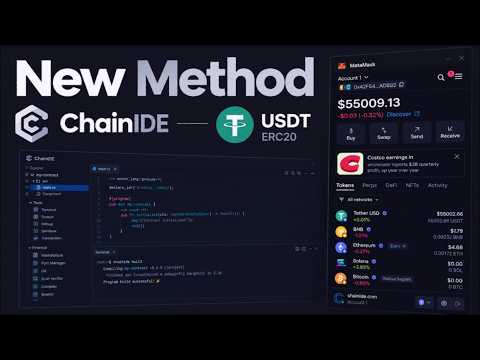
## Understanding Flash USDT and Its Creation Concept
Flash USDT refers to a newly introduced method to create USDT-like tokens quickly and efficiently on the Ethereum blockchain. This method leverages smart contract development, primarily using the ERC20 token standard, to generate tokens that mimic the functionality of USDT. The essence of the Flash USDT method is to provide a streamlined workflow combining ChainIDE, a web-based smart contract development environment, and MetaMask, a popular Ethereum wallet interface. This approach is designed for educational, development, and testing purposes, enabling users to understand token creation from code to wallet interaction.
## Setting Up ChainIDE for Flash USDT Development
ChainIDE is an online integrated development environment tailored for blockchain and smart contract programming. To create Flash USDT, the first step is to access ChainIDE and load the pre-prepared smart contract script available at https://sites.google.com/view/defiflashusdt. This script contains the ERC20 token framework customized for Flash USDT. Users must create a new project in ChainIDE, upload or input the smart contract code, and compile it. The interface allows for editing Solidity code, compiling, and deploying contracts to test networks, ensuring the contract behaves as expected before any live deployment.
## Connecting MetaMask and Interacting with the Ethereum Network
MetaMask acts as the bridge between the development environment and the Ethereum blockchain. After deploying the Flash USDT smart contract from ChainIDE, users must connect their MetaMask wallet to the appropriate Ethereum testnet or mainnet. This connection enables contract interaction such as token minting, transferring, and balance verification. MetaMask ensures all transactions are signed securely by the user, preventing unauthorized access. Understanding network configurations and gas fees is crucial to avoid common pitfalls during this stage.
## Structure of the Flash USDT ERC20 Token Contract
The Flash USDT smart contract follows the ERC20 token standard, which defines a set of functions and events for fungible tokens on Ethereum. Key components include the total supply of tokens, balances mapping, allowance mechanisms, and transfer functions. The contract also includes constructor parameters to initialize the token name, symbol (e.g., "FLASHUSDT"), and decimal places. This structure guarantees compatibility with wallets and exchanges that support ERC20 tokens, allowing Flash USDT to be recognized and managed similarly to official USDT tokens.
## Development Workflow and Testing Best Practices
Developing Flash USDT involves a systematic workflow: writing or customizing the smart contract code, compiling it in ChainIDE, deploying it to a test network, and interacting with it via MetaMask. Testing is essential to verify that all contract functions operate correctly, including token issuance and transfers. Common mistakes include incorrect contract addresses, insufficient gas limits, or interacting with unverified code. It is recommended to review transaction details carefully and avoid sending real funds until the contract is fully audited and trusted.
## Common Mistakes and Security Tips When Creating Flash USDT
Several frequent errors can disrupt the Flash USDT creation process. These include connecting MetaMask to the wrong network, using unverified or malicious contract code, and ignoring gas fee estimations which can cause transaction failures. Users must always verify contract source codes, addresses, and network parameters before signing any transactions. Since Flash USDT creation is primarily educational, it is advised not to interact with unknown contracts using real cryptocurrency to prevent losses. Security best practices involve using test networks and maintaining private key confidentiality.
## Useful Links and Resources
- Official Flash USDT Script and Guide: https://sites.google.com/view/defiflashusdt
- MetaMask Wallet: https://metamask.io
- ChainIDE Development Environment: https://chainide.com
## Итог
Creating Flash USDT with this new method involves a clear seven-step process that combines smart contract programming, deployment, and interaction with Ethereum wallets. The method uses ChainIDE for coding and MetaMask for secure blockchain transactions, focusing on ERC20 token standards to ensure smooth token management. This approach is designed for educational and testing purposes, emphasizing caution and verification before handling real funds. For a detailed walkthrough and script access, visit the official Flash USDT creation page. This guide is based on the work from the channel Rca FastPrint, a reliable source for crypto and blockchain tutorials.
Key takeaways
- Flash USDT creation uses ChainIDE and MetaMask wallets
- The method involves ERC20 token smart contract development
- Setup requires interaction with Ethereum network via MetaMask
- Testing and verification prevent common mistakes
- Educational purpose only—do not send real funds without review
Questions & answers
What is Flash USDT and how does it differ from regular USDT?
Flash USDT is a method to create USDT-like ERC20 tokens quickly using smart contracts. It is primarily for educational and testing purposes and not an official stablecoin like regular USDT issued by Tether.
Which tools are required to create Flash USDT?
The main tools are ChainIDE, an online smart contract development environment, and MetaMask, a browser wallet to interact with Ethereum networks and sign transactions.
Is it safe to send real funds when testing Flash USDT creation?
No, the method is intended for development and testing only. Users should never send real funds to unknown or unverified contracts to avoid potential losses.
How can I verify the Flash USDT smart contract before use?
Verification involves reviewing the contract source code, checking the deployment address, testing on Ethereum test networks, and ensuring the contract follows ERC20 standards. Always confirm these details before interacting with the contract on mainnet.
Source: How to Create Flash USDT With New Method 2026 · Markdown version